

Why Cars Parked Under Direct Sunlight Lose Battery Performance Faste
Have you ever come back to your car after a long, sunny day and found it struggling to start? You are not alone. Many car owners face this problem, especially in hot climates. The truth is, parking your car under direct sunlight does real damage to the battery over time.

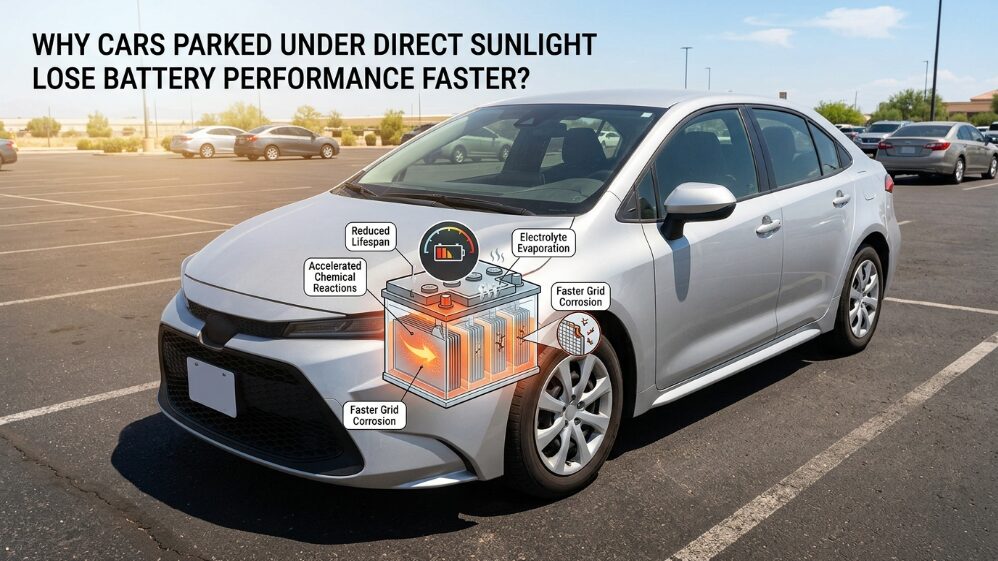
Heat is one of the biggest enemies of a car battery. When a car sits in the sun for hours, the temperature inside the hood can go well above 70°C (158°F). This extreme heat speeds up the chemical reactions inside the battery, causing the fluid inside to evaporate faster. At the same time, the battery plates start to break down, the battery loses its ability to hold a full charge, and internal parts get damaged.
All of this together leads to a much shorter battery life. If you live in a place with a hot climate and need help choosing the right battery, trusted providers like Sayara Battery offer expert guidance on the best Dubai car battery options built to handle extreme heat conditions.
Read Also: Business Bay 2 Bus Station Dubai—Routes, Timings & Fare
How Sunlight Damages Your Car Battery: 8 Key Reasons
Understanding exactly what happens inside your battery when it gets too hot can help you take better care of it. Here are the main reasons why direct sunlight shortens battery life.
1. High Heat Speeds Up Chemical Breakdown
A car battery works by using a chemical reaction between lead plates and an acid solution. When the temperature goes up, this reaction happens much faster than it should. While a faster reaction might sound like a good thing, it actually causes the battery to wear out at a quicker pace.
The internal parts get used up sooner, and the overall life of the battery gets cut short. Studies show that for every 10°C rise in temperature, the rate of chemical reactions roughly doubles, which means the battery ages twice as fast.
2. Battery Fluid Evaporates in the Heat
Inside most traditional car batteries, there is a liquid called “electrolyte,” a mix of water and sulfuric acid. When the battery gets very hot from sitting in the sun, the water in this fluid starts to evaporate.
As the water level drops, the battery plates get exposed to air. Once the plates are exposed, they start to corrode and break down quickly. Low electrolyte levels also make it harder for the battery to produce the power needed to start the engine, which leads to weaker starts over time.
3. The Battery Discharges Faster in Hot Conditions
Heat causes the battery to self-discharge at a higher rate. This means the battery slowly loses its stored energy even when the car is not being used. When you park your car in the sun for long hours every day, the battery keeps draining on its own.
Over time, this repeated draining makes the battery weaker. If it fully discharges too many times, it may never fully recover its original capacity again.
4. The Alternator Works Harder to Recharge the Battery
After the battery loses charge from the heat, the alternator has to work extra hard to bring it back up to full power when you drive. This puts a lot of stress on both the alternator and the battery.
The more the battery is deeply drained and then recharged under hot conditions, the faster its internal structure breaks down. This cycle of heavy discharge and recharge is one of the main reasons hot-climate batteries tend to fail much earlier than expected.
5. Sulfation Builds Up on the Battery Plates
When a battery is left in the heat and allowed to discharge, a process called sulfation begins to happen. Sulfation is when lead sulfate crystals start to form on the battery plates. These crystals block the plates and reduce the battery’s ability to accept or deliver a charge.
A little bit of sulfation is normal, but heat speeds up this process. Once the buildup gets thick, it becomes very hard to reverse, and the battery eventually loses most of its charging ability.
6. Heat Causes the Battery Casing to Warp or Crack
Car batteries are made of plastic casings designed to hold everything together safely. When exposed to extreme heat for long periods, this plastic can soften, bend, or even crack. A warped or cracked casing can cause acid leaks, which are not only dangerous but also damaging to nearby engine parts.
A damaged casing also makes it easier for moisture and dirt to get inside, which causes further problems. This kind of physical damage is not always visible right away, but it leads to battery failure over time.
7. Hot Batteries Struggle to Handle Electrical Load
A healthy battery in normal conditions can handle the electrical demands of a car, from starting the engine to powering the air conditioning and electronics. But a heat-damaged battery loses this ability.
When the internal resistance of a battery goes up due to heat damage, it cannot supply steady power to all the systems in the car. You may notice flickering lights, a slow engine crank, or electronics cutting out. These are all signs that the battery is struggling to keep up with the car’s needs.
8. Repeated Heat Exposure Creates Long-Term Capacity Loss
Even if your battery seems fine right now, repeated daily exposure to direct sunlight quietly reduces its total capacity over months. Each time it gets very hot, a small amount of permanent damage is done.
After a full summer of parking in the sun, your battery may only hold 70% or 80% of what it used to. This kind of slow damage is hard to notice until the battery finally fails, often at the worst possible moment, like early in the morning when you need to get to work.
How to Protect Your Car Battery from Heat Damage?
Knowing the causes is the first step. Here are some simple ways to keep your battery safe:
- Park in the shade or a covered garage whenever possible to reduce heat exposure.
- Use a car sunshade on your windshield to lower the temperature inside the vehicle.
- Get your battery tested regularly, especially before and after summer, to catch any weakness early.
- Choose a battery designed for hot climates; some batteries are built with thicker plates and special materials that handle high temperatures better.
- Check electrolyte levels in non-sealed batteries and top them up with distilled water if needed.
- Avoid leaving the car parked in direct sunlight for many hours every day if it is not necessary.
Conclusion
Direct sunlight does far more damage to a car battery than most people realize. From speeding up chemical reactions to causing fluid loss, plate damage, and capacity drop, the effects of heat build up quietly until the battery gives out completely.
The good news is that with a few simple habits, like parking in the shade and getting regular battery checks, you can add years to your battery’s life. If your current battery is already showing signs of heat damage, it may be time to replace it. As Gulf Emirates always recommends, choosing one better suited for the climate you live in makes all the difference.